
Academy Bank 
1201 Walnut St Kansas City MO 64106
What can we help you find?
Contact Us
Bank Routing Number
107001481
Bank by Mail/General Mail
PO Box 26458
Kansas City, MO 64196
Deposit Only Mailbox
PO Box 26744
Kansas City, MO 64196
Phone Number
1-877-712-2265
Download our app
Access your
accounts here.
accounts here.

Grab your phone and scan the code to download!
featured
2026-09-11
Commercial Banking
published
5-minute
Commercial Business Loans and Equipment Financing for Manufacturers

-
-
A Year-End Planning Guide for 2027
How manufacturing equipment financing, business term loans and working capital solutions can help companies modernize operations, preserve liquidity and prepare for growth
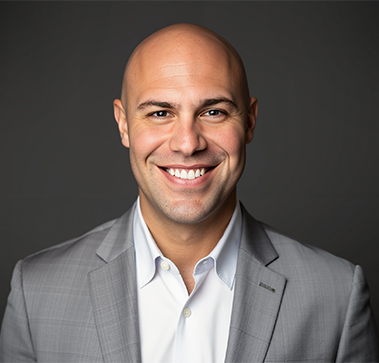
By Matt Fuhrman, Associate Director of Middle Market Banking, Academy Bank
What is the best way to finance manufacturing equipment?
The right approach connects the equipment’s expected useful life and cash-flow impact to a financing structure that supports the company’s broader operating plan. For manufacturers, year-end planning is about more than replacing an aging machine. It is an opportunity to use commercial business loans, manufacturing equipment financing or a business equipment loan to improve throughput, address persistent skills gaps, reduce downtime and strengthen resilience—while preserving liquidity for inventory, payroll and growth.
That conversation is especially important heading into 2027. Deloitte’s 2026 manufacturing outlook describes an industry facing elevated costs, employment pressure and policy uncertainty while continuing to prioritize targeted technology investments. The firm reports that 80% of manufacturing executives plan to direct at least 20% of their improvement budgets to smart-manufacturing initiatives such as automation, analytics, cloud technology and AI.
Equipment investment is becoming a strategic operating decision
Automation, robotics and connected production systems are increasingly central to manufacturers’ operating strategies. The International Federation of Robotics reports that 542,000 industrial robots were installed worldwide in 2024 and that the global operational stock reached 4.664 million units. The scale of adoption reinforces an important point: technology investment is no longer limited to the largest manufacturers. It is increasingly part of the competitive equation for middle-market companies and businesses evaluating a small business commercial loan.
The strongest equipment decisions start with the client’s business objective—not the asset itself. Academy Bank wants to understand whether the investment will add capacity, improve margins, reduce operating risk or open a new market. From there, we can help structure financing around the cash flow the equipment is expected to generate.
Where manufacturers are focusing capital
Investment priorities vary by industry and operating model, but several categories consistently rise to the top:
- Production and automation: robotics, CNC machinery, packaging lines, assembly equipment and material-handling systems.
- Data and intelligence: machine vision, predictive maintenance, industrial internet of things devices and AI-enabled scheduling or quality control.
- Warehouse and distribution: automated storage, conveyors, fulfillment systems, forklifts and fleet assets.
- Facilities: plant modernization, capacity expansion, energy-efficiency upgrades and qualifying building systems.
The best investment is not necessarily the newest technology. It is the one tied to a measurable operational constraint. A manufacturer considering a robotic cell, for example, should identify the expected effect on cycle time, scrap, overtime, safety, staffing and production capacity before selecting a financing structure.
Practical step: Build an investment case with a baseline and target for three to five metrics—such as units per hour, changeover time, unplanned downtime, first-pass yield and labor hours per unit. Those measures create a more credible view of payback and help leadership evaluate performance after installation.
How can commercial business loans and working capital financing help preserve liquidity?
Manufacturers often approach year-end with several competing uses for cash: building inventory, paying seasonal bonuses, funding receivables, securing raw materials and preparing for expansion. Paying cash for equipment may appear straightforward, but it can reduce flexibility when an unexpected order, supply interruption or acquisition opportunity emerges. A well-structured commercial business loan or equipment financing loan can help match repayment to the asset’s useful life. Business lines of credit and working capital loans may support shorter-term operating needs, while commercial small business loans may provide growing companies with capital for equipment, facilities or expansion.
“Manufacturers need both confidence and flexibility when they make a major capital commitment,” said Paul Holewinski, President and CEO of Academy Bank. “Our commercial value proposition is built around transaction certainty and direct access to decision makers. That matters when delivery schedules, installation dates and production plans depend on financing coming together as expected.”
Whether a company is comparing business commercial loans, commercial equipment loans, a business term loan, equipment leasing or a commercial line of credit, the structure should support both the purchase and the organization’s ongoing liquidity needs.
Factor tax timing into the plan—but do not let it drive the decision
The IRS explains that a business may elect under Section 179 to expense all or part of the cost of qualifying property in the year it is placed in service, subject to applicable dollar and taxable-income limits. The IRS also states that qualified property acquired and placed in service after January 19, 2025, may qualify for a 100% special depreciation allowance.
For calendar-year businesses, “placed in service” generally means the equipment must be ready and available for its intended use—not merely ordered or paid for. Delivery, installation, testing and employee training can therefore become critical-path items. Businesses should consult their tax and legal advisers about eligibility and timing; financing decisions should be based on operational value and repayment capacity, not an assumed deduction alone.
Five questions to answer before choosing a commercial equipment loan
1. What constraint will this investment solve? Define whether the priority is capacity, quality, labor availability, cost, safety, lead time or resilience.
2. What is the full project cost? Include freight, site preparation, installation, software, training, maintenance, insurance and initial working capital—not only the equipment invoice.
3. How quickly will the asset contribute cash flow? Account for delivery lead times, commissioning, production ramp-up and customer qualification.
4. What downside can the business absorb? Stress-test the plan for lower volumes, delayed installation, higher input costs and slower collections.
5. Which financing structure fits the asset and strategy? Compare term, amortization, down payment, collateral, covenants, prepayment terms and the effect on future borrowing capacity.
2. What is the full project cost? Include freight, site preparation, installation, software, training, maintenance, insurance and initial working capital—not only the equipment invoice.
3. How quickly will the asset contribute cash flow? Account for delivery lead times, commissioning, production ramp-up and customer qualification.
4. What downside can the business absorb? Stress-test the plan for lower volumes, delayed installation, higher input costs and slower collections.
5. Which financing structure fits the asset and strategy? Compare term, amortization, down payment, collateral, covenants, prepayment terms and the effect on future borrowing capacity.
Create a lender-ready package for manufacturing business financing
Starting the financing conversation early can reduce surprises and give the company time to compare options. A useful package typically includes:
- Recent and year-to-date financial statements.
- Current debt schedule and borrowing-base information, if applicable.
- Equipment quote, vendor details and estimated delivery and installation dates.
- A concise business case showing expected productivity, cost savings or revenue impact.
- Projections that incorporate the new debt service and a reasonable downside scenario.
- Details about related working-capital or facility needs.
I recommend treating the financing discussion as part of the operating plan rather than a final administrative step. When your commercial banking partner can see the complete project—the operational goal, implementation timeline and cash-flow effect—we can have a much more useful conversation about structure and help the client anticipate issues before they affect closing or delivery.
Planning for 2027 starts now
The manufacturers best positioned for 2027 will not necessarily be those that spend the most. They will be the organizations that connect capital investment to a clearly defined operating priority, measure the expected return, protect adequate liquidity and build in room to adapt.
Year-end is the right time to bring operations, finance, tax advisers, equipment vendors and banking partners into the same conversation. That coordination can help a manufacturer move from a wish list of equipment to a disciplined capital plan—one designed to strengthen productivity today without limiting tomorrow’s opportunities.
Frequently asked questions about commercial loans
What can a commercial business loan be used for?
Depending on the lender, borrower and credit approval, proceeds may help finance equipment, vehicles, facilities, expansion, acquisitions or working-capital needs.
How does a business loan commercial financing structure differ from paying cash?
Financing can preserve cash for operations and align repayment with the period in which the asset is expected to generate value. The appropriate term, amortization and collateral depend on the company’s financial position, the asset and the project.
Can growing companies use online banking for commercial business?
Digital banking and treasury tools can help a business review their balance, manage payments and maintain visibility into cash flow. Lending and cash-management solutions work best when they are considered together as part of the company’s broader financial plan.
Are business commercial loans only for large companies?
No. Financing may be available for qualified businesses at different stages of growth. A small business commercial loan or other commercial small business loan may be appropriate when the financing amount, repayment structure and business purpose fit the borrower’s needs and financial capacity.
What financing options should a manufacturer compare?
Depending on the project and the company’s needs, options may include manufacturing equipment financing, a commercial equipment loan, a business term loan, equipment leasing, a commercial line of credit or working capital financing. Comparing repayment term, collateral, cash-flow timing and total project cost can help identify the right structure.
Talk with Academy Bank
Whether you are expanding production capacity, adding automation, modernizing a facility or upgrading warehouse operations, Academy Bank’s commercial banking team can help you explore manufacturing business financing, commercial equipment loans, business term loans, working capital financing and commercial lines of credit that align with your goals and preserve valuable liquidity. Our relationship-driven approach combines experienced local business bankers, responsive decision-making and practical guidance—because this is not simply financing for equipment. It is the next step in your company’s growth.
All loans and lines of credit are subject to credit approval. Product availability, eligibility requirements, terms, conditions, restrictions and fees may apply. Consult your tax and legal advisers regarding your individual circumstances.